
Jalan expressed concern over individual ministers, some of them politically heavyweights, taking vital decisions without taking the Cabinet into confidence.

Twenty-six entities, including the Tatas, Aditya Birla Group, Anil Ambani-led Reliance Capital and Religare, apart from India Post, applied. Videocon Group, later on withdrew its application.

The proposal to merge the Gujarat International Finance Tec-City (GIFT City) units of the National Stock Exchange (NSE) and BSE has reached an advanced stage, and both bourses could file an application before the National Company Law Tribunal as early as this month, according to a top regulatory official. Sources indicate that the merger proposal has received approval from their respective boards. Both the NSE and BSE are arch rivals when it comes to onshore trading.

The International Financial Services Centre Authority (IFSCA) plans to operationalise the framework for direct listing of companies at International Financial Services Centre (IFSC) exchanges by the end of the year, said Chairperson K Rajaraman. He added that the amendments would be notified within three months. Further, the GIFT City regulator is also considering the launch of separate payments system regulations - similar to that of the real time gross settlement (RTGS) for banking within a few months.

For the first time, consumers, including those at the so-called bottom of the pyramid, are monetising gold by taking loans from banks, offering the yellow metal as collateral, says Tamal Bandyopadhyay.

'He's at best a holding-CEO. Not one who will re-imagine the bank,' a senior banker and former colleague tells Raghu Mohan about HDFC Bank CEO & MD Sashidhar Jagdishan.
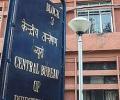
There are four first information reports against Saradha Group in which it is alleged that thousands of investors were allegedly duped by the company officials and their associates who swindled their deposits.

It has been a year since the Reserve Bank of India (RBI) initiated prompt corrective action (PCA), an exercise that puts weak banks under central bank scrutiny, against the 94-year-old Lakshmi Vilas Bank (LVB). But recently, this low-profile Chennai-headquartered bank found itself attracting some unwonted publicity when 60 per cent of its shareholders voted against a proposal to re-appoint seven directors, including one of the promoters, K R Pradeep (who holds around 2 per cent), and the company's managing director & chief executive officer S Sundar.

The Enforcement Directorate arrested Yes Bank founder Rana Kapoor under money-laundering charges in Mumbai in the early hours of Sunday, officials said. The banker was held under the provision of the Prevention of Money Laundering Act (PMLA) around 3 am as he was allegedly not cooperating in the probe, they said.

Tamal Bandyopadhyay discusses his latest book Bandhan: The Making of a Bank at Bandhan headquarters in Kolkata.
However, the prime minister has told confidants that he was unable to do justice to the foreign affairs portfolio and admitted the need for a full-time foreign minister.

Its obsession for growth, chasing corporate clients and giving up its original mandate of meeting the needs of local trade and businesses. A quarter of its loan book has gone bad. That's an error of business strategy, points out Tamal Bandyopadhyay.

The Bombay high court on Thursday said Chanda Kochhar's termination as CEO of ICICI Bank was prima facie 'valid' and dismissed her interim application seeking post-retirement benefits.

India may adopt norms similar to the US Federal Reserve model, which regulates conglomerate-led banks in the country.

It is also considering to hike FDI cap for public sector from 20 per cent to 49 per cent

Banks should neither be timid nor adventurous while lending as the loans of today should not become NPAs of tomorrow, he said.

The Supreme Court on Tuesday questioned the CBI over not objecting to repeated extension of the two-week interim bail granted in January this year to former ICICI Bank CEO-cum-MD Chanda Kochhar and her businessman husband Deepak Kochhar in a loan fraud case. A bench of Justices Aniruddha Bose and Bela M Trivedi asked Additional Solicitor General SV Raju, appearing for the CBI, as to why the probe agency did not resist repeated extension of interim bail granted to them by the Bombay high court on January 9. "This order is of January 9 and interim bail was granted for only two weeks. Why have you not resisted? Why are you permitting it to continue for such a long period?

Sounding a note of caution, former Reserve Bank Governor Raghuram Rajan has said that India is "dangerously close" to the Hindu rate of growth in view of subdued private sector investment, high interest rates and slowing global growth. Rajan said that sequential slowdown in the quarterly growth, as revealed by the latest estimate of national income released by the National Statistical Office (NSO) last month, was worrying. Hindu rate of growth is a term describing low Indian economic growth rates from the 1950s to the 1980s, which averaged around 4 per cent.

'That was my mistake.' 'Gautam Adani was not involved in forming the Maharashtra government.' 'Adani was not there in the meeting.' 'The meeting was at his guest house and we were sitting in his guest house.'

The Bharatiya Janata Party rejected this was any sort of demonetisation and instead reminded the Congress that even during the rule of Manmohan Singh, old currency notes were taken off circulation.

The law minister last month told the assembly that of the lord's total Rs 626.44 crore, Rs 592 crore was kept in Yes Bank. While Rs 545 crore was in the bank as fixed deposits, the remaining Rs 47 crore was in a flexi account.

Rau's felt the need to be where the action was.
The institute that once drew largely elite students also decided to expand its base and cater to a wider pool.
Former RBI Governor Bimal Jalan on Wednesday said the Congress leader Manmohan Singh was assuming the office of the prime minister at a time when the country was facing "huge challenges" in the political, economic and social spheres.

Former RBI governors Urjit Patel and Raghuram Rajan have also expressed worry about the Mudra scheme, particularly government's target-setting practice and the rising bad loans.
The economy can grow by 8.0 per cent if the government improves the public administration and delivery systems, carry forward legal reforms and implement policies promptly
One can expect significant changes at India's banks in ensuing months.

The noted economist said some of the bad loans are due to a slowdown in the economy and asset restructuring companies are part of the solution.

The 55 basis point (bps) spike in the US 10-year bond yield, triggered by a combination of FOMC's hawkish commentary and BOJ's relaxation of the yield control curve (YCC) has made analysts cautious on Asian equities and expect them to trade sideways in the short-to-medium term.

'The finance ministry and public sector banks have tried to keep the names of wilful defaulters secret.' 'Secrecy and concealing information are inbred among banks and even the RBI,' observes Debashis Basu, editor, www.moneylife.in.
Former Reserve Bank of India Governor Bimal Jalan on Thursday ruled out the possibility of his becoming the next finance minister, saying he did not belong to any political party.

PMC Bank depositors have spent the last one year holding protests, meeting politicians, writing to various authorities in an effort to get their hard-earned money back.

Indeed, there were frauds, and the politician-banker-industrialist nexus played a role in the rise of NPAs, but governance issues in Indian banking are far more nuanced and complex, reveals Tamal Bandyopadhyay.

In the aftermath of the PMC Bank mess which was in the RBI's highest rating of 'A' category, trustworthiness of these ratings may be up for a review.

Vodafone Idea, the promoter of Aditya Bira Idea Payments Bank, said in a notification to the exchanges late on Friday that the board of the bank approved winding up the business, subject to approval from the Reserve Bank of India.

At the heart of Paytm's slide lies the abject failure of its Super App strategy, notes Indrajit Gupta.

A PhD from Chicago-Booth and a top-ranking IIT-IIM alumnus, Krishnamurthy Subramanian is one of the world's leading experts in banking, corporate governance and economic policy

Urjit Patel's reappointment will raise market hopes that Rajan, will also be offered an extension when his tenure ends in September.
